
While spring may fast be approaching, do you ever wonder how birds cope during winter?
Limited sources of food
Most birds eat as much as they can during the fall to increase their weight so they survive in winter when food is scarce. Just like squirrels, many bird species eat berries, seeds and insects hiding in bark. Food sustains them and enables them to generate metabolic heat. Feeders provide an excellent supplement to food provided by native plants.
What else do they do to survive the cold?
Evolutionary strategies, in addition to food, include feathers, huddling, shivering, and sheltering.
A few months ago, I saw a fat round sparrow sitting on our dog fence. I worried it might be sick. Feathers, however, offer great insulation. Many birds puff up their feathers to trap warm air around their bodies.
Under extreme conditions, certain birds may briefly lower their metabolism, called torpor, but this makes them more vulnerable to predators.
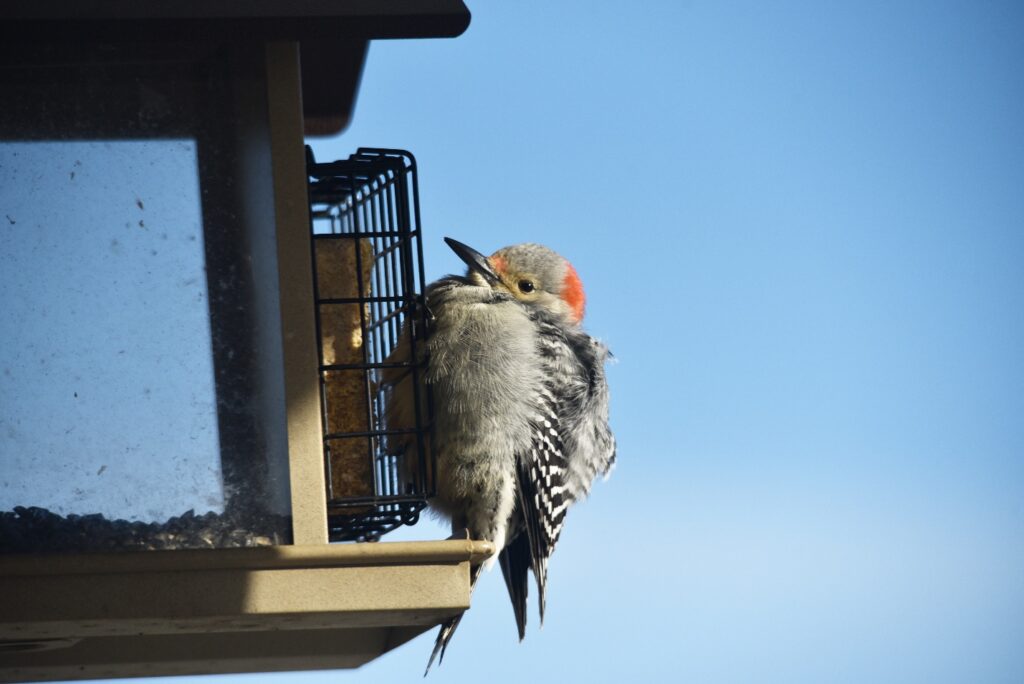
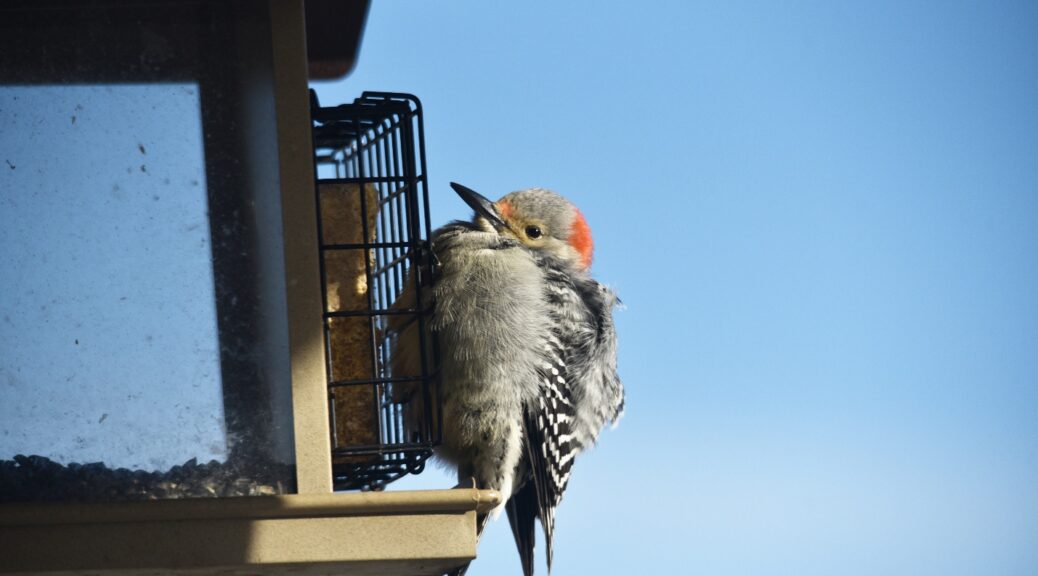
A red-bellied woodpecker fluffs her feathers.
Photo courtesy of Courtney Celley, USFWS.
What about their feet?
Most birds have special scales on their legs to protect them from the cold. The way their blood flows also helps prevent their bodies getting cold from their feet.
Another technique: birds may tuck one foot up in its feathers to keep it warm or they may sit on their feet. They turn their heads and insert their bills under their back feathers for warmth as well.
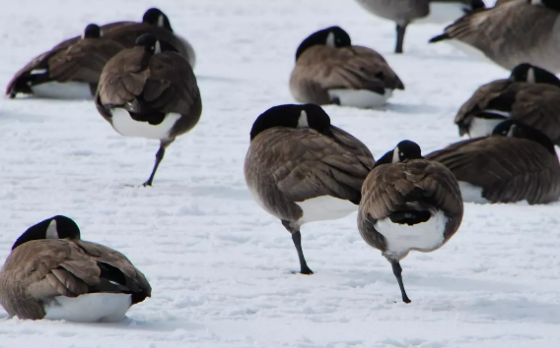
Canada geese keep their feet warm on a cold day.
Photo courtesy of the USFWS.
Birds roost and huddle for warmth
Small birds roost in nooks, holes and cavities in trees (dead and alive), evergreen shrubs, brush piles, and nest boxes. Roosting protects them from the cold, damp and wind while providing extra insulation.
Another strategy is for several birds to huddle together in the same shelter for warmth (kind of like us!). Some people build roosting structures for them or adapt nestboxes into winter roosts. They turn the front panel upside down, so the entry is near the bottom to conserve heat. Perches can even be added on the inside.
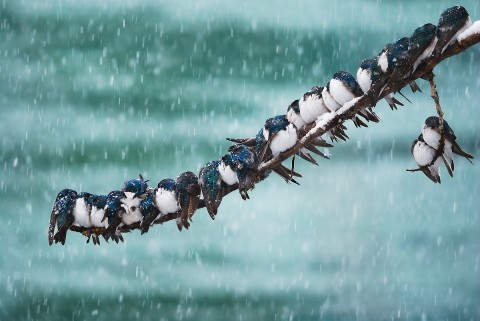
Tree swallows huddle together on a branch.
Photo by Keith Williams, Creative Commons.
Shivering
Birds also shiver to stay warm. They rapidly contract muscles, which increases their metabolic rate to maintain their body temperature at ~100°F. Small birds often fluff their feathers and shiver to survive extreme temperatures.
Shelter: another critical element
Birds need shelter in winter. Evergreen trees such as hemlocks, eastern red cedar, eastern white pine, evergreen magnolias, and holly trees as well as thick shrubs provide critical shelter for them. Juncos and tree sparrow often shelter on the ground so it is good to leave the leaves for them.
What about water?
Water is essential for birds in winter. Melted snow and ice in gutters is one source. They also get some moisture from their food, including from insects that overwinter in native trees and under leaves. As a last resort they sip from dripping icicles and eat snow, but it takes energy for them warm it to their body temperature.
What can we do to help?
Plant native perennials, shrubs and trees especially oak trees and shrubs with berries. Leave the leaves to provide critical food and shelter for all the creatures who overwinter there. Many birds will search for food in the leaves throughout the winter.
Hanging feeders that provide food high in protein and fat is also beneficial. Nutrient-rich black sunflower seed is a relatively inexpensive option. Chipped sunflower seeds, peanuts, safflower, and suet are all excellent.
If you can, set up a heated bird bath.
Best of all, you can enjoy watching them as you wait for the spring flowers to appear.
Sources: US Fish and Wildlife Service, National Audubon Society, The Nature Conservancy, The Cornell Lab of Ornithology, and The Aldo Leopold.org
~ Cat Beise, professor emeritus, Salisbury University
Looking for a place to see birds? The Central Audubon Society of Maryland maintains two sanctuaries that are open to the public: Audrey Carroll Sanctuary in Mt. Airy and Fred Archibald Sanctuary in New Market. They host bird and butterfly walks; bird seed and native plant sales; and sanctuary volunteer days. For details, contact the society.