
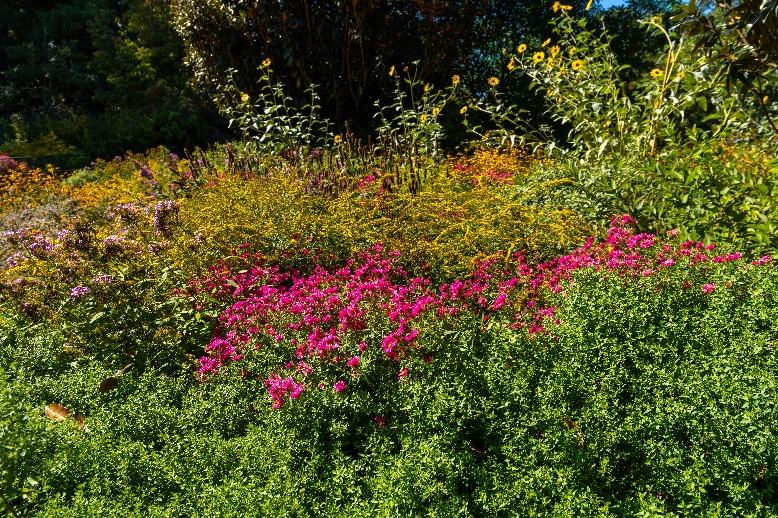
Nestled in the rolling Piedmont hills of Delaware lies a botanical treasure, Mt Cuba Center.
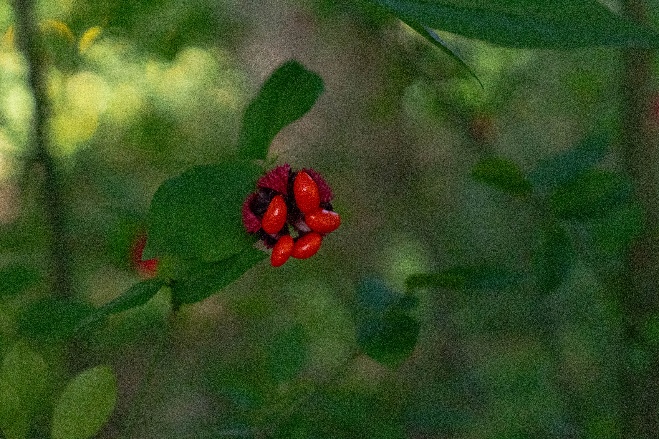
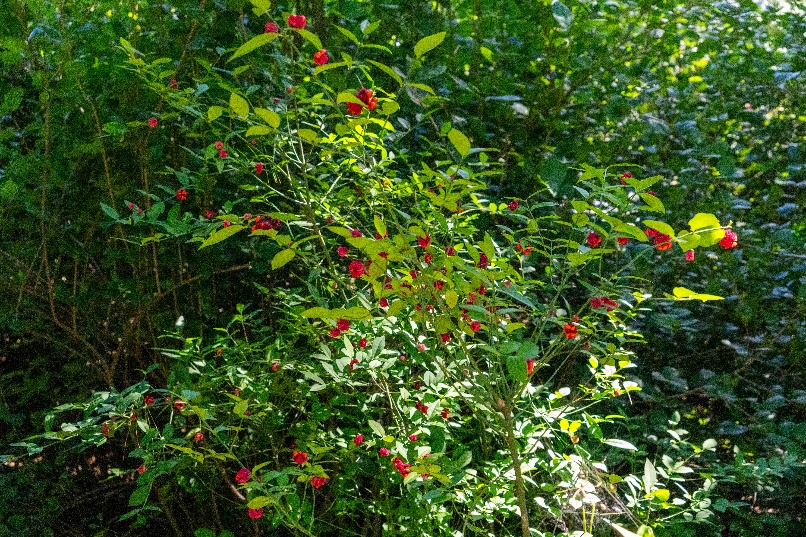
Strawberry bushes or bursting hearts, Euonymus americanus, line the path to the main house and gardens of Mt Cuba. A visit in the fall, allows you to see these unusual bushes in their full glory. A deciduous shrub, its bumpy red seed pods split open in the fall to reveal bright orange-red seeds.
Spread over 1,000 acres, the garden and research center contains more than 1,000 native species and cultivars. The center showcases plants from the Eastern Temperate Forests with a specific emphasis on flora from the Appalachian Piedmont Region. The center focuses on native plant conservation and ecological education.
Mt Cuba also has nationally significant and accredited collections of North American Trillium and Hexastylis. North America has 38 known species of trillium, the majority in eastern states. Some are flashy while others are not. Anyone who has seen them blooming during a spring walk, knows how enchanting they are. They can be enjoyed along one of the trails at Mt Cuba in early spring. Heartleaf, Hexastylis, a low-growing evergreen plant, belongs to the birthwort family, Aristolochiaceae. It resembles and is related to wild ginger.
Species and cultivars overflow beds of formally arranged paths and patios as well as naturalistic meadows and woodlands.
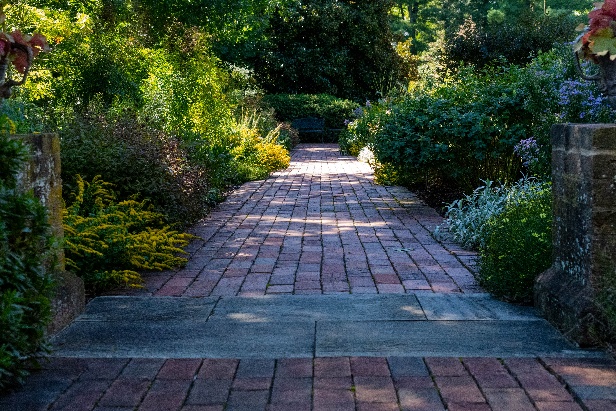
A walkway by the Copeland home.
Mt Cuba began as the private estate of husband and wife Lammot du Pont Copeland and Pamela Cunningham Copeland in 1935. It became a public garden in 2013 with the goal of increasing public appreciation for the beauty and importance of native plants. The center also aims to protect sustaining habitats.
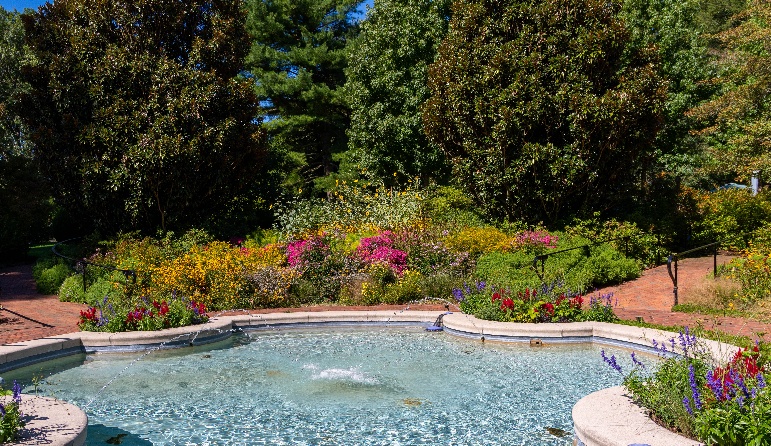
This was originally used as the family’s swimming pool. Now it serves as the focal point of a stunning all-native garden.
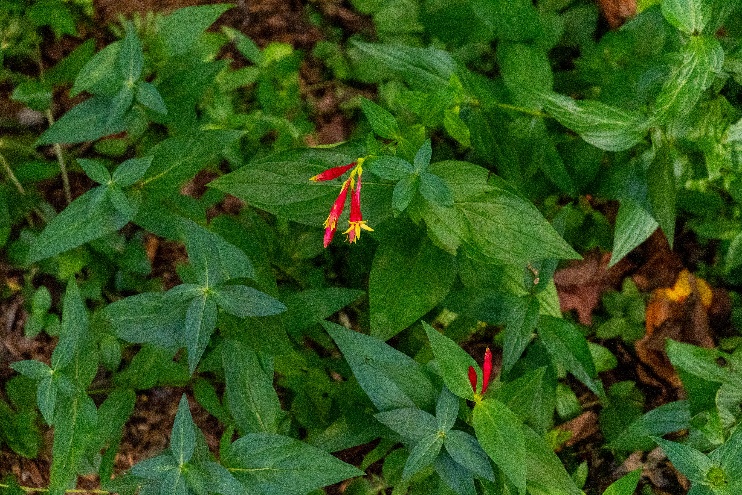
A beautiful perennial, Woodland pink, Spigelia marilandica, grows in clumps and blooms from May to July. A few blooms may even appear through September. It is a straight species.
Mt Cuba conducts plant trials comparing species and their cultivars. They study performance, ornamental qualities and ecological values. They have run these multi-year studies on hydrangeas, coreopsis, garden phlox and a number of other plants. For information about which species or cultivar would work well in your garden, you might want to review their studies.
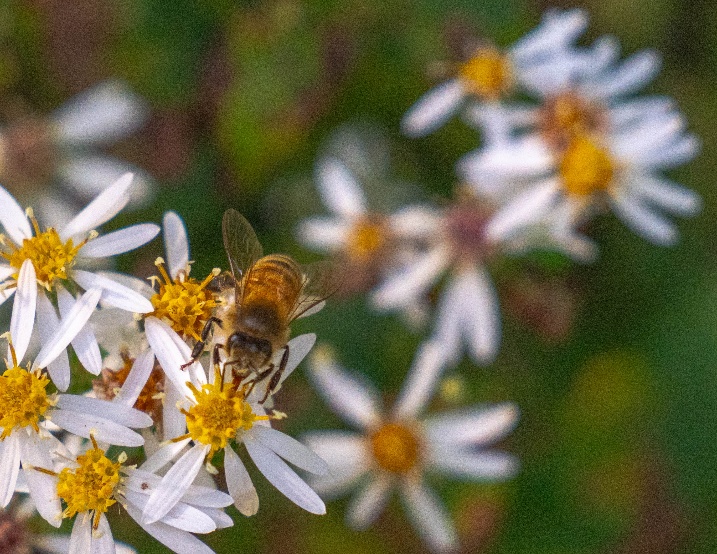
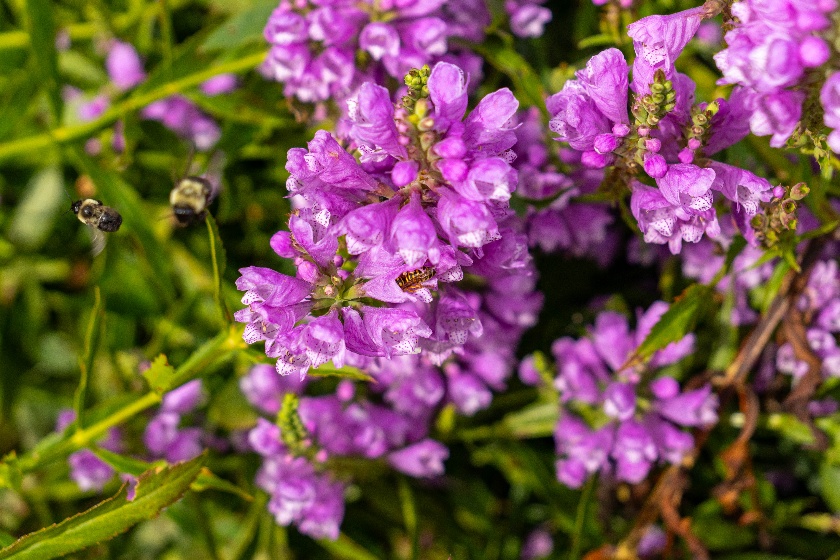
Bees load on food to prepare for winter.
Admission fees are $20 for adults and $10 for children 6 to 17. Children 5 and under are free. Mt Cuba offers gardening, art and wellness classes. It also offers ecological gardening certificates and holds trial gardens and native plant sales.
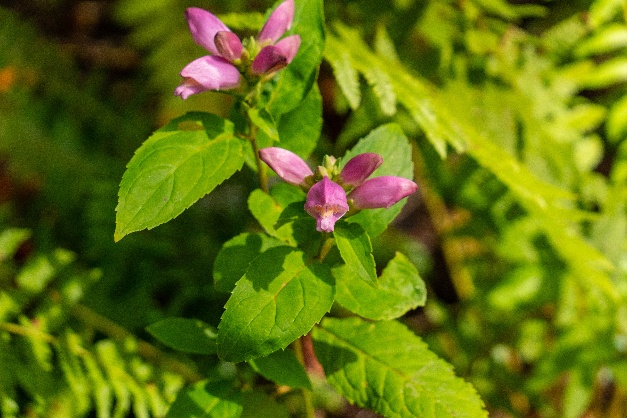
While often grown in Maryland, pink turtlehead, Chelone lyonii, is native from the Appachana mountains of Virginia to South Carolina. White turtlehead, Chelone glabra, is native to the Maryland Piedmont Region. It likes sun- to part- shade and damp- to wet-soil. The Checkerspot butterfly uses it as a host plant.
Mt Cuba is located at 3120 Barley Mill Rd, Hockessin, DE 19707. Hours change seasonally. The center is open April 1 through early November.
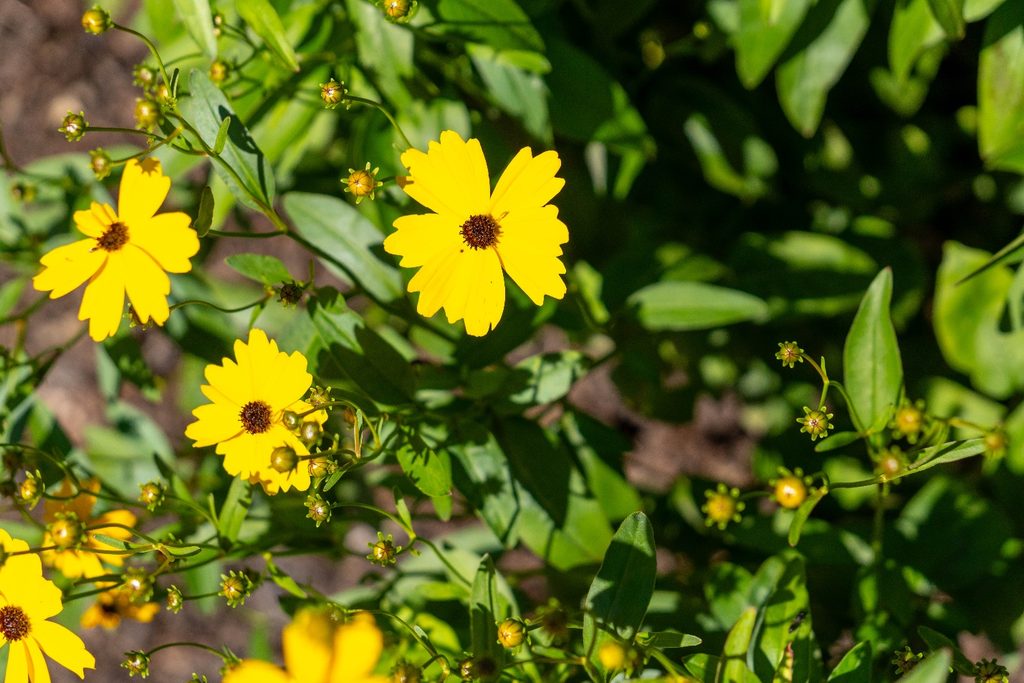
Coreopsis provides garden color for months in the summer and fall as well as sustenance for pollinators.
The enclosed photos show some of the native plants and gardens throughout the property, but words and photos, do not capture Mt Cuba’s beauty. The only way to truly enjoy this gem is to explore it yourself.
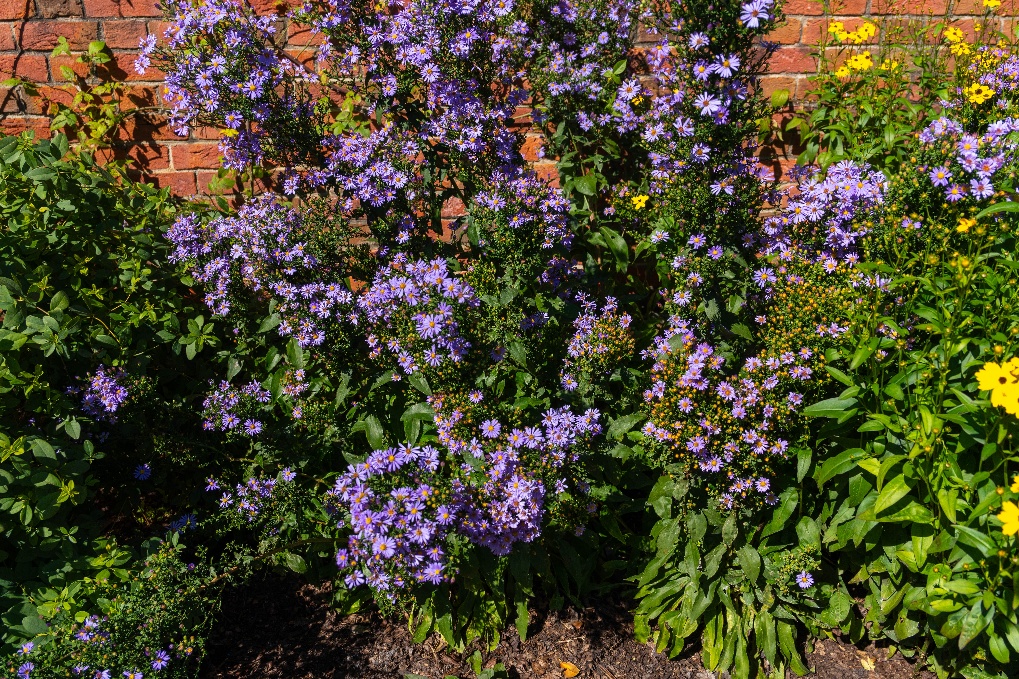
Asters, shown above, and goldenrod, solidago, offer pollinators and other insects’ critical sources of food before they migrate or overwinter until spring.
Photos are by Dave O’Callaghan.