
Over a hundred years ago, a pioneering American landscape architect blurred the lines between gardening and agriculture combining native plants with a European-based style of axial garden design.
Who was this avant-garde designer, lecturer and author? Martha Brooks Hutcheson, 1871-1959. Her gardens, lectures and writings, however, have largely been lost to history.
Susan Cohan decided to set the record straight. Her exhibit, “Kindred Spirit” in this year’s Philadelphia Flower Show, pays tribute to Hutcheson’s works.
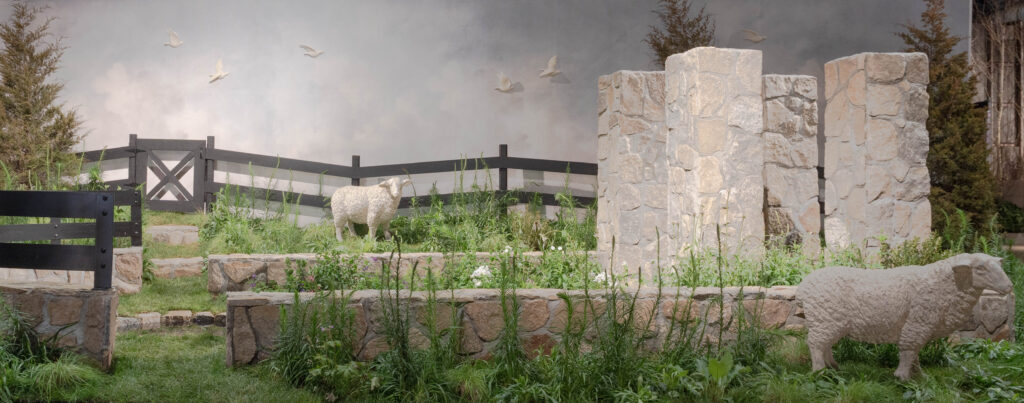
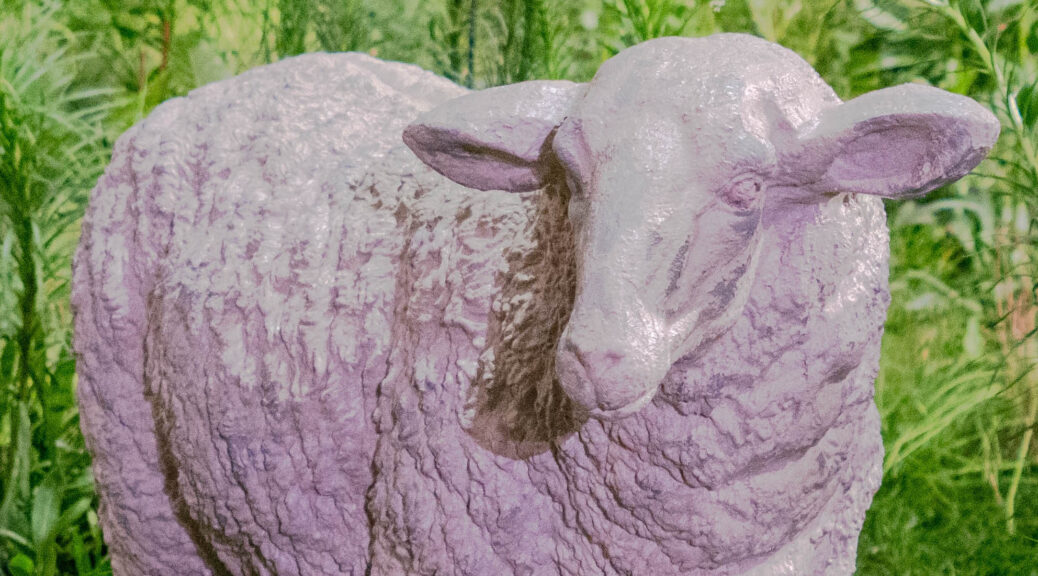
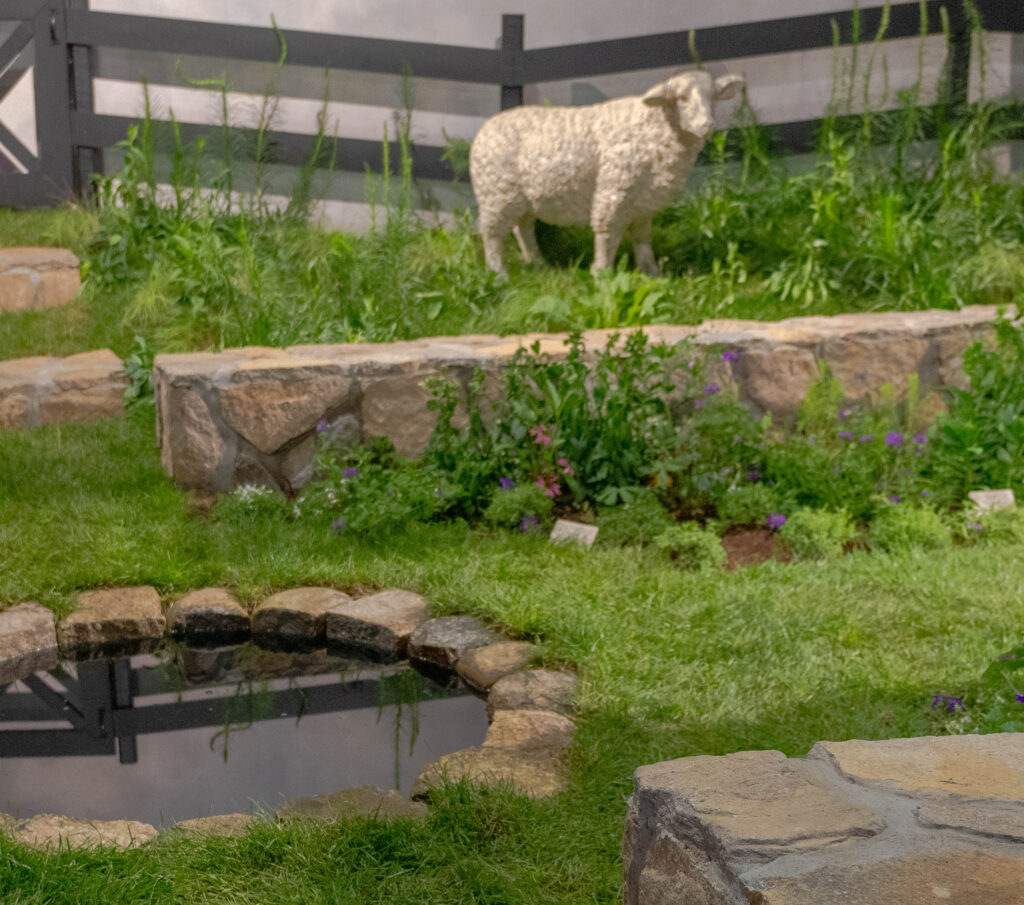
The garden, arranged with structure and symmetry, overflows with native plants growing with abandon. Focal points created by rustic stonework draw the visitor’s eye through the exhibit; a small pond echoes the larger pool found in Hutcheson’s original garden on her farm.
Hutcheson’s work resonated with Cohan’s own sense of design.
Hutcheson was a firm believer in axial design—once an axis has been established, the garden can be filled with plants.
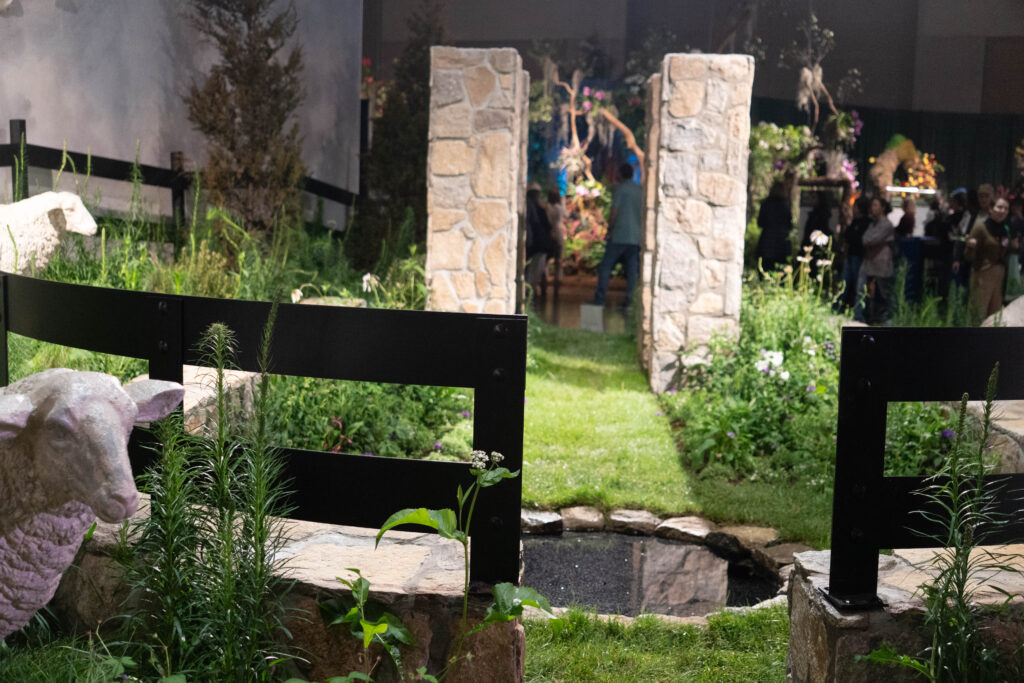
Both women consider structure and focus critical elements within a garden. Once that has been established, native plants can roam.
Hutchinson, in her book, urges people to use and celebrate our abundant native flora, says Cohan.
Another element to include: hidden focal points that are revealed as one moves through the garden.
All of the original paths and the iconic round pool are still in existence at Hutchinson’s farm, which is now a teaching garden.
“It is inspiring,” says Cohan who first studied design in school. She designed jewelry and gardened for “peace of mine.”
Her love of design and the outdoors made landscape design an irresistible choice.
“Although I’ve always been involved in design in one industry or another, garden and landscape design ticked all of the boxes in terms of what interested me. This is my third design career and the one that stuck,” she notes.
Despite Cohan’s interest in Hutcheson, researching her career proved challenging. Most of her works have been lost and while she lectured and wrote, little has been written about her. Her book, written in 1923, The Spirit of the Garden, remains one of the few accessible works left.
Hutcheson studied at the New York School of Applied Design for Women for several years then traveled to Europe for two years.
The trip left a lasting impression. She was deeply influenced by the fundamental design principal of garden axis (structure, symmetry, focus, etc.) found in European gardens. She was especially attracted to Italian architectural elements.
In 1900, at age 29, she enrolled in the Massachusettes Institute of Technology’s new Landscape Architecture program.
After two years, she left without a degree and began practicing in New England, New York and New Jersey.
A hallmark of her gardens was her adherence to axis garden design and quality plantings, i.e. selecting and installing healthy, robust plants suited to their intended environment
She completed dozens of commissions, including gardens at Bennington College and Billings Farm, now the Marsh -Billings-Rockefeller National Historical Park.
She also designed country estates such as the Colonial Revival garden at the Longfellow House; the Frederick Moseley estate, now Maudslay State Park, in Massachusetts; and the garden at Alice Longfellow’s house, now the Longfellow House-Washington’s Headquarters National Historic Historic Site in Cambridge.
Her own home, Merchiston Farm, in New Jersey, is now the Bamboo Brook Outdoor Education Center.
Most of these works have been lost.
Hutcheson retired from commercial practice after her marriage in 1911. Twenty years later, after raising her daughter, she returned to work on her five-acre garden on the couple’s 100-acre farm in New Jersey.
Her personal garden reflected the classical Italian gardens she had visited earlier in her life: native plants around a pond; a vegetable garden; flower borders; orchards; allees; and farm buildings. This farm, with garden, is now preserved as the Banboo Brook Outdoor Education Center.
Hutcheson was vocal about her beliefs regarding landscape architecture: it should be used for the betterment of society.
Cohan considers it important to incorporate elements of gracious living with ecological responsibility in every project.
In 1935 Hutchinson was named a fellow in the American Society of Landscape Architects, the third woman to receive this distinction.
Cohan, an internationally award-winning landscape designer, was named winner of the 2021 Designer of the Year by the Association of Professional Landscape Designers (APLD). Her exhibit “Kindred Spirt” was awarded a Philadelphia Horticultural Society’s Silver Medal at the 2026 Philadelphia Flower Show.
Photos by Dave O’Callaghan
Laura