
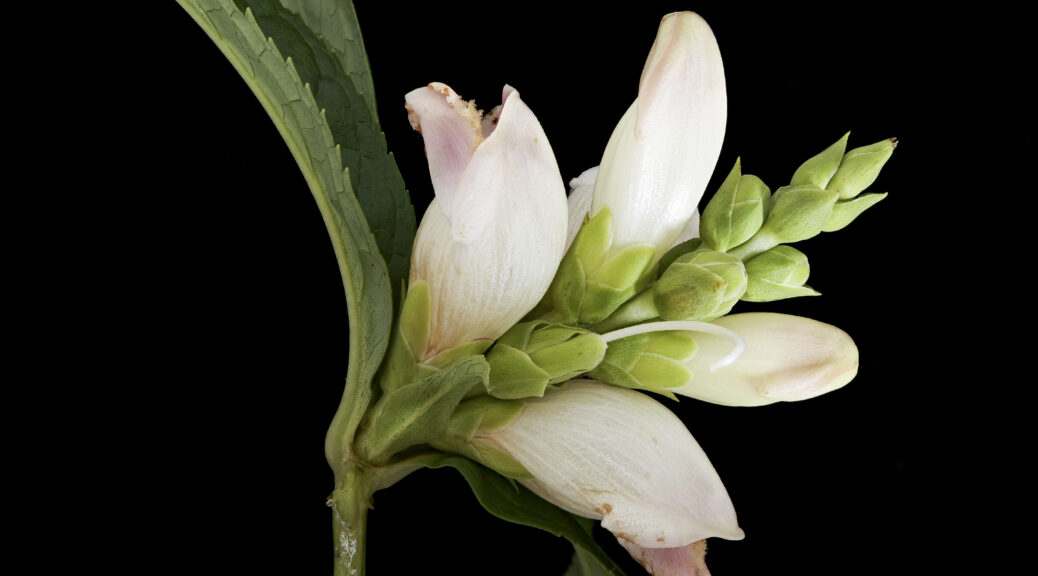
As summer days grow shorter, gardens often flag unless you have some strong season finishers. White turtlehead, Chelone glabra, is just such a plant.
This perennial offers a lovely touch of white that looks elegant when paired with blue lobelia, Lobelia siphilitica; Joe-Pye weed, Eutrochium purpureum; asters; grasses; and other plants that like moist soil.
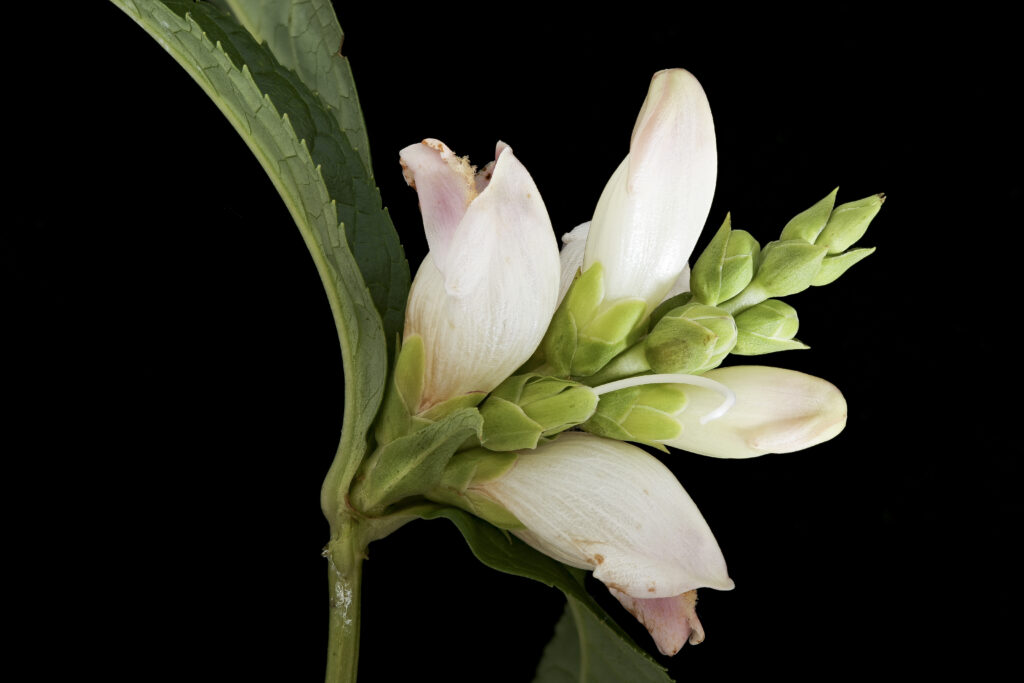
A native of Maryland, it brings a fresh touch of cool white color to gardens, woods, stream banks, and swamps during the hot days of August and September.
The flowers resemble snapdragons or turtle heads, which led to the plant being named for Chelone, a nymph of Greek mythology. Chelone received her name after she was turned into a tortoise for failing to attend Zeus and Hera’s wedding.
The plant serves as the primary host for Maryland’s state butterfly, the endangered Baltimore checkerspot.
An herbaceous perennial, it grows from 2 to 3 feet tall and spreads from 1.5 to 2.5 feet wide. It has showy white flowers with a pink-tinge and blooms from August to October.
A similar, though slightly smaller plant, is Chelone obliqua, commonly known as pink turtlehead or rose turtlehead.
White turtlehead likes to grow in medium to wet, rich humusy soil in part shade. If grown in sunny areas, it likes composted leaf mulch.
A low-maintenance plant, it can be naturalized or used in a rain garden. It also works to reduce erosion.
A member of the large Plantain family, other members include snapdragons, foxgloves and speedwells.
It has no serious insect or disease problems according to the Missouri Botanical Gardens unless the soil is kept dry or air circulation is poor.
The plant attracts butterflies, bumblebees and hummingbirds.
Photo and specimen by Helen Lowe Metzman, USGS.
References: Maryland Gardeners of Northern Virginia and the Missouri Botanical Gardens