
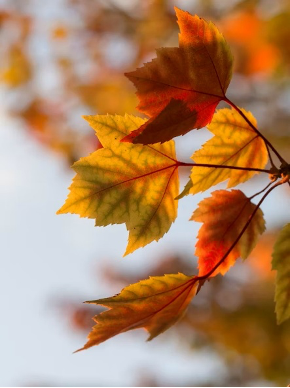
When I was young, fall was a time my siblings and I raked up leaves from the massive tulip tree that dominated our backyard. After carefully putting them in an enormous pile, we jumped in, sending them scattering.
Times have changed. My sister, brother and I live in different parts of the county, the tulip tree is gone, and leaves no longer need to be raked.
No longer rake, you protest!
Yes, leaves provide yard and the wildlife with invaluable resources that should be cherished. (They shouldn’t even be shredded since most of the beneficial insects within them–bees, butterflies and others burrowed within—may be destroyed.)
I hear your skepticism.
But think of a forest, I reply. The rich soil in forests comes, in large part, from fallen leaves.
Wherever they fall, leaves enrich soil, reduce erosion and keep the ground moist. Even a thin layer on grass provides benefits.
“A thin layer of leaves is actually healthy for grass, but the leaves also don’t need to be left exactly where they fall. You can rake them into garden beds, around tree bases, or into other designated areas. Leaves are great for soil quality: they can suppress weeds, retain moisture, and boost nutrition. And perennial plants appreciate the extra insulation through the winter, too,” writes Justin Wheeler, Scott Hoffman Black, Deborah Seiler of the Xerces Society for Invertebrate Conservation.
They also provide critical protection for the numerous beneficial insects that overwinter in the ground or under the leaves including many butterflies and native bees.
“The leaf litter in forests acts as a protective layer for soil conditions. It creates a physical barrier between the soil surface and atmosphere that reduces soil drying, responds to atmospheric temperature fluctuations, and reduces erosion from precipitation events,” notes Abby Yancy, Carnegie Museum of Natural History.
She adds that as the leaves decompose, they act as a natural fertilizer for plants year-round, which is especially important for forest wildflowers including native empherals such as Virginia bluebells (Mertensia virginica), Virginia spring beauty (Claytonia virginica), and trilliums.
Still wondering
What to do With Fallen Leaves »?
The World Wildlife Foundation has a few more suggestions.
So put down your rake and enjoy the fall.
Laura O’Callaghan
Photo by Aaron Burden, Unsplash.