
After this winter’s snow, ice and freezing temperatures, the thought of spring ephemerals pushing their way through the ground brings hope.
These plants emerge in woodlands as the forest floor begin to warm but before trees’ leaf out.
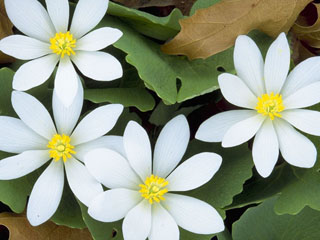
One of the first harbingers of spring, these hearty souls gather energy from the sun in early spring; it must last them for the remainder of the year since their blooms disappears before many people even notice them.
How many species of spring empherals in Maryland’s Piedmont Region exit? At least 20 but the number could be much higher; exact figures are difficult to pin down.
Early native bees and flies pollinate them, the plants then set seed within a few weeks of emerging before returning into the ground in late spring or early summer.
These wonderful plants should not be underestimated. They must be tough in order to withstand the vagaries of spring weather. They tend to be low growing to protect themselves from strong winds.
“They compete for resources with other plants by being small and fast, rather than trying to muscle others out of the way,” states Heritage Conservancy.
Empherals usually provide early pollinators with a valuable source of food.
“Most are perennial and their bulbs, corms or other underground storage organs provide the food needed to produce the next year’s leaves and flowers. They are magnets for pollinators and are an important source of nectar and pollen early in the year when few other plants are flowering. Many have specialist pollinators associated with them, but they usually have several different pollinators, including native bees and many species of flies.” Piedmont Master Gardeners.
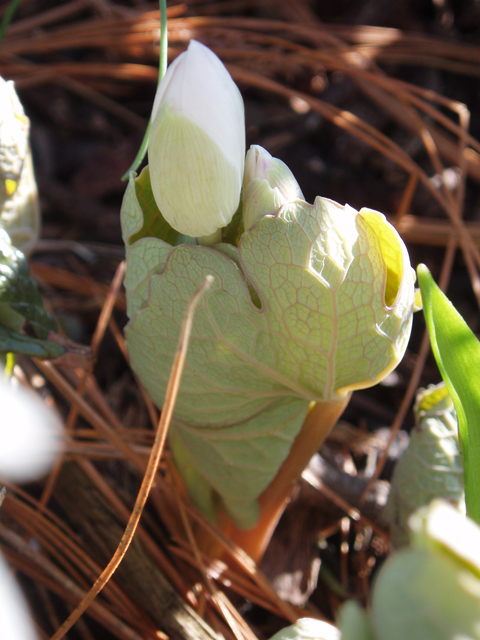
Photo by Julie Makin, LBJWC.
Bloodroot: Earliest of the Empherals
Bloodroot (Sanguinaria canadensis) typically blooms before other local empherals.
This member of the poppy family derives its name from its roots. When they break or are damaged, red latex quickly oozes to the surface, according to Heritage Conservancy.
The latex has been used as a dye and face paint though it is toxic to humans if ingested. Ants, on the other hand, like the plant.
In a process called myrmecochory, both plants and ants benefit. Bloodroot has seeds with a fat-filled structure on their exterior called an elaiosome, says Julie Michaelson from Xerces.
“The elaiosome is a delicious snack to an ant but just an expendable accessory for the seed! They disperse its seeds by coating them in ant food.
“Ants carry the entire seed into their nest beneath the soil surface and feed on the elaiosome. They deposit the leftover seed into their “trash piles”, which end up being a perfect nursery for the seed to develop! Ants’ trash piles are underground heaps of decaying plant and animal material, which are full of nutrients. Thanks to the ants, the seeds get carried away from their parent plant, buried in nourishing soil, and are protected from predators, like slugs and mice, that would eat the entire seed, not just the elaiosome,” adds Michaelson.
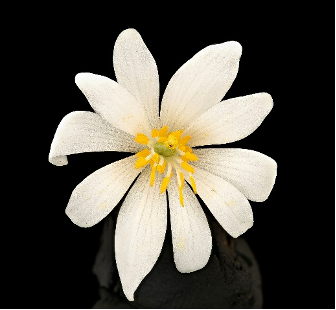
Here is a quick bio of bloodroot from The Missouri Botanical Garden Plant Finder:
Height: 0.50 to 0.75 feet
Spread: 0.25 to 0.50 feet
Bloom Time: March to April
Bloom Description: White or pink tinged
Sun: Part shade to full shade
Water: Medium
Maintenance: Medium
Suggested Use: Naturalize
Flower: Showy
Tolerate: Drought, Dry Soil, Black Walnut
Note: Bloodroot can be a wonderful addition to a garden but wear gloves when touching it and don’t ever ingest it, it is poisonous.
~ Laura