
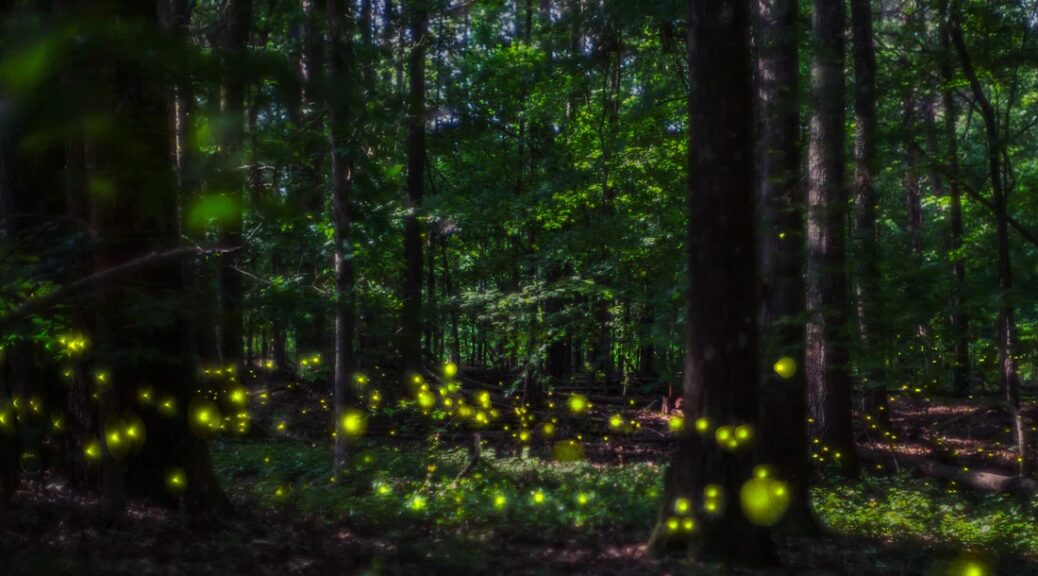
Remember, as a child, going outside after dinner and being amazed at the sudden lightshow of lightning bugs?
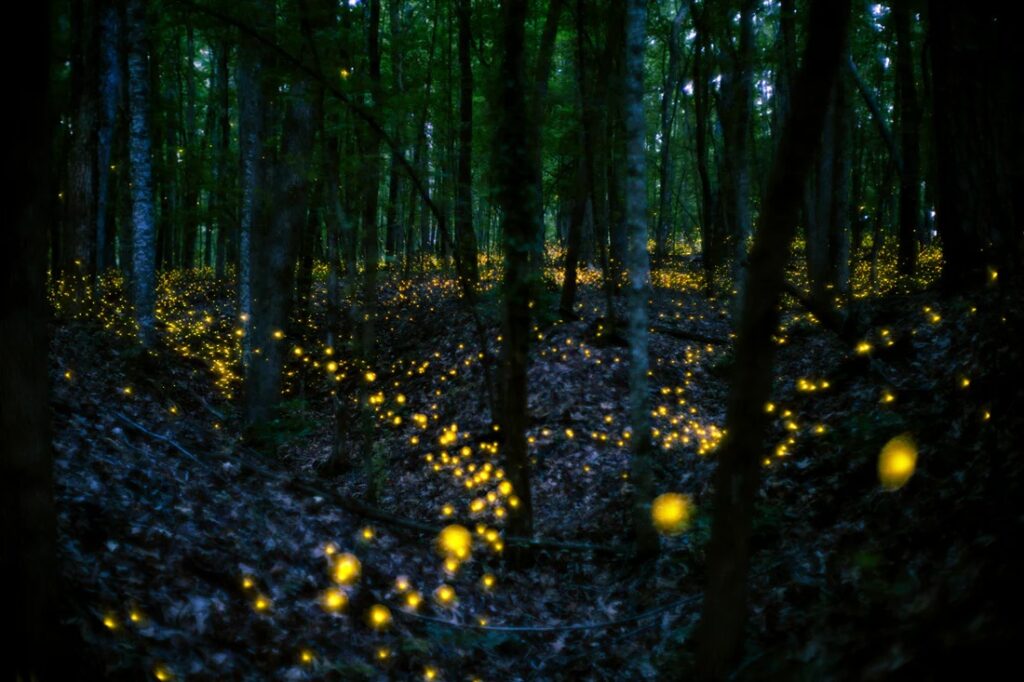
I felt that same awe and joy when I recently re-discovered these fascinating show-offs looking for love in our backyard. Maybe you’ve had the pleasure of seeing them too. Here are some highlights from what I’ve learned about them.
In North America, 125 species of fireflies have been identified, mostly east of the Mississippi.
They begin to appear in Maryland in late May and continue flashing until mid-July though you may see a few up even later.
Fireflies, or lightning bugs as they are also known, fall into three categories: flashing species, glow-worms and dark fireflies.
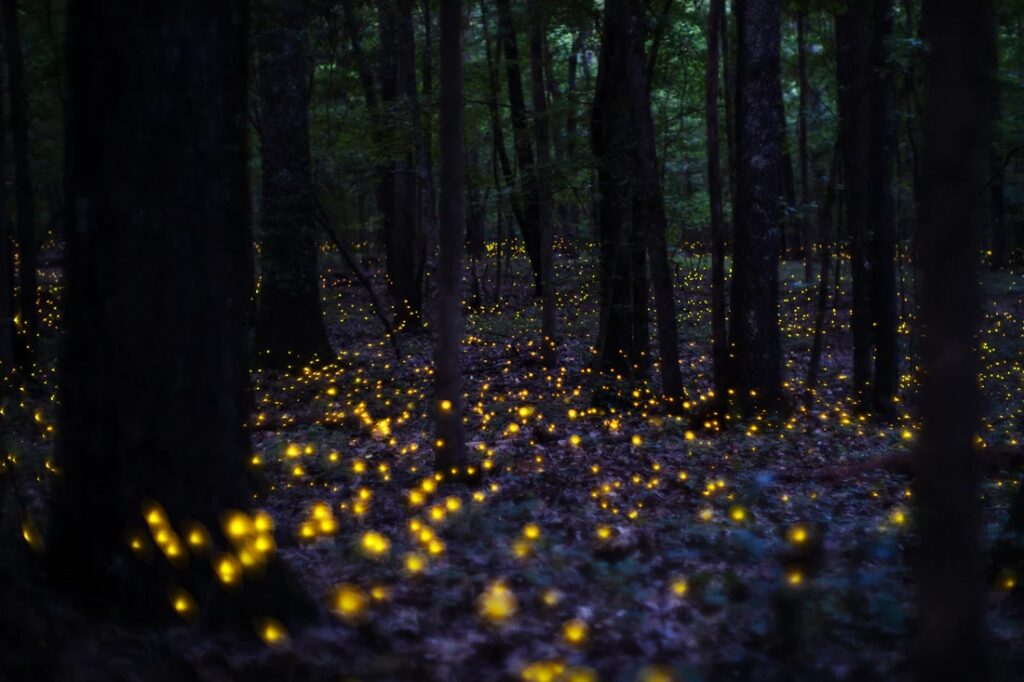
The flashing species use their light to signal potential mates. Many display flash patterns unique to their species.
Others glow rather than flash, hence the name glowworms.
They use their light to attract mates, catch prey or deter predators. Some females mimic females of another species to attract that species’ male. They then can eat them.
Fireflies protect themselves by secreting blood that tastes bitter and may be poisonous to their predators but are generally harmless to humans.
Fireflies are not flies. They are beetles, that go through four stages of development: egg, pupa, larva, adult. Adults live a few weeks to a few months, just long enough to mate and lay eggs. It is not certain what they eat, if anything. Larvae, however, may live 1-2 years, in the ground, and are voracious predators of snails and worms. In some species, eggs or larva glow while in the ground.
The light emitted by firefly tails is called bioluminescence. The chemical process that produces this light is useful in science and medicine, in studying diseases like cancer and muscular dystrophy, and in building electronic detectors for food spoilage and bacterial contamination, and even for spacecraft searching for alien life!
Most of us have noticed there are fewer of fireflies than what we used to see years ago, sadly part of the broader “insect apocalypse” as noted by the New York Times in 2018 and the University of Florida in 2025.
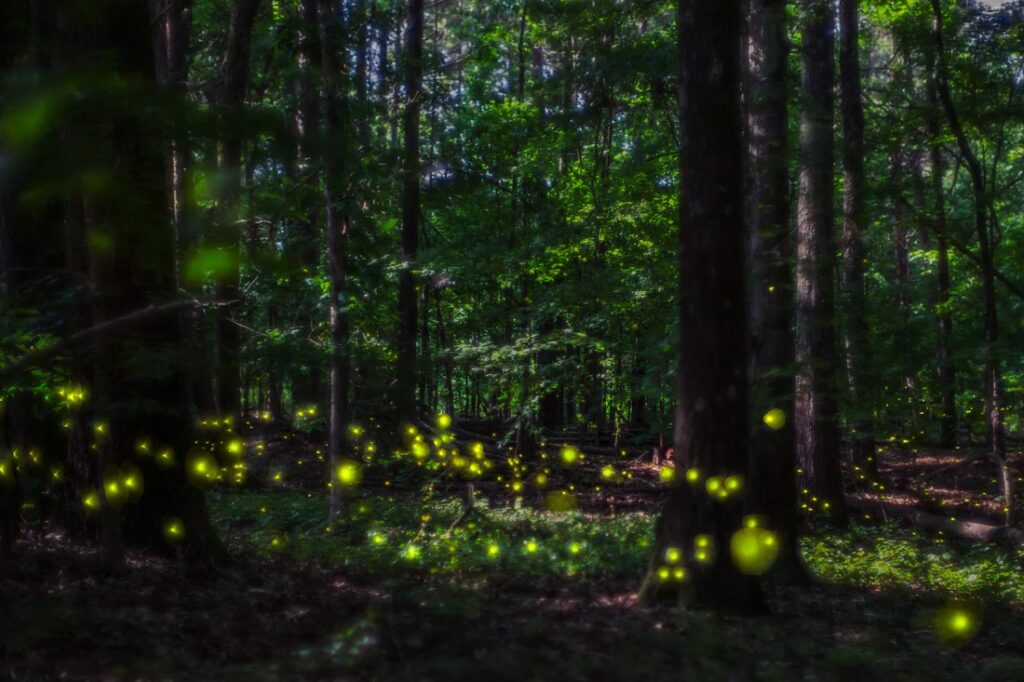
The usual culprits are not surprising: human development; loss of habitat; pesticides; light pollution, which interferes with their mating and communication; and the fact that most of their life cycle is in the ground in fields or rotting wood and forest litter, often at the edge of ponds and streams, yet another reason not to mow right down to the water’s edge.
We know what we need to do in order to sustain these magical creatures and many others, not just for their own sake, but for us humans as well!
Written by Cat Beise, Professor Emerita, Salisbury University.
*Sources include Firefly.org, the Xerces Society, and the Washington Post.
Photos capture the irresistible magic of fireflies in the night.
Photos by Mark Magnarella. To see more, view his website at Mark Magnarella’s firefly photography. A portion of all print sales will be donated to firefly.org, a small non-profit organization focused on firefly education and conservation.